The great Haute-Loire food specialties come down to three names: the Puy green lentil (AOP), the first vegetable ever granted a designation of origin (1996); Fin gras du Mézenc, a spring beef fattened on mountain hay and protected since 2006; and Verveine du Velay, a herbal liqueur created in Le Puy in 1859. Around them orbit farmhouse cheeses such as artisou and a sturdy tradition of cured meats. Here is what to know, and where to taste them along the GR65.
What to eat in Haute-Loire: the essentials at a glance
The Velay is a land of volcanic plateaus, long winters and dry summers. That hard climate explains almost everything on the plate: a thin-skinned lentil, cattle that spend winter indoors in front of fragrant hay, plants steeped in alcohol to keep a little summer in a bottle. Pilgrims leaving Le Puy walk straight through this landscape on their first two days.
The Puy green lentil (AOP), the Velay's "caviar"
Small, pale green and marbled with dark blue, the Puy lentil is easy to spot. INAO describes its "pale green robe streaked with dark blue-green marbling" and repeats its nickname, the vegetable caviar of the Velay. Its real distinction lies elsewhere: a thin skin and a non-floury kernel, so it cooks quickly and holds its shape.
A designation born in a courtroom
- 1935: on 17 January, the civil court of Le Puy rules that "Lentille verte du Puy" is a designation of origin, not a generic term.
- 1996: it becomes the first vegetable to obtain a designation of origin, then is registered at European level (AOP).
- 2017: the current specification is approved, amended in 2018. Lentils must be packed within the production area.
According to INAO, lentils have probably been grown in the Velay since the 11th to 13th centuries, perhaps since Roman times: an amphora full of lentils was unearthed at Saint-Paulien.
A terroir of dry wind
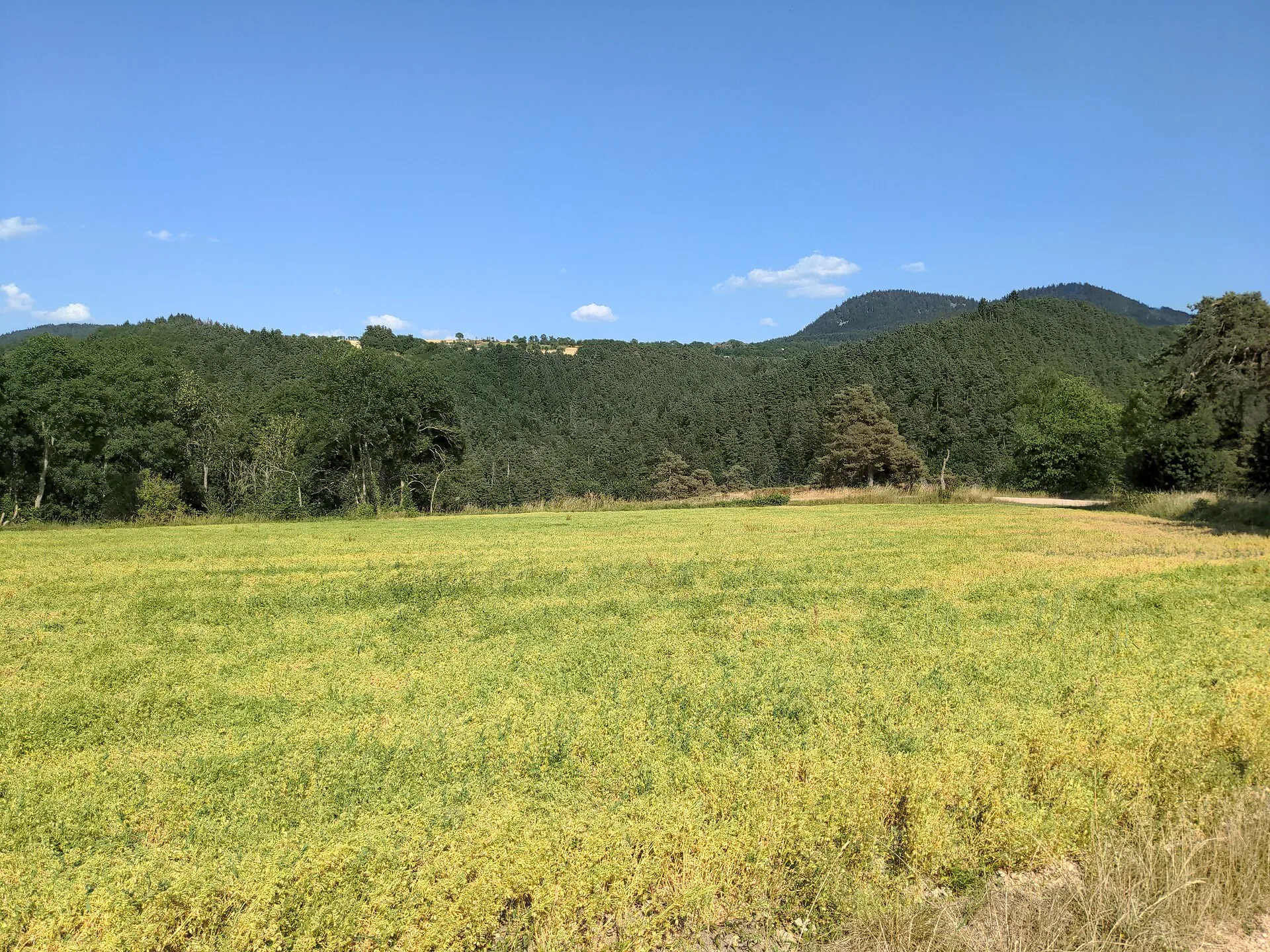
The production area covers two natural regions of Haute-Loire, the Le Puy basin and the volcanic Velay (88 communes, according to French Wikipedia). The surrounding relief creates a foehn effect: in summer a dry wind puts the plants under heavy water stress. The seeds never quite reach full maturity, hence a thinner coat and less starch. Some 900 growers farm around 4,500 hectares, for an average certified harvest of 4,000 to 5,000 tonnes.
Le Puy's tourist office suggests salt pork with lentils (petit salé aux lentilles) and velvety soups. Served cold as a salad with a mustardy dressing, they also make a fine walker's picnic: easy to carry and filling.
Fin gras du Mézenc (AOP), a springtime beef
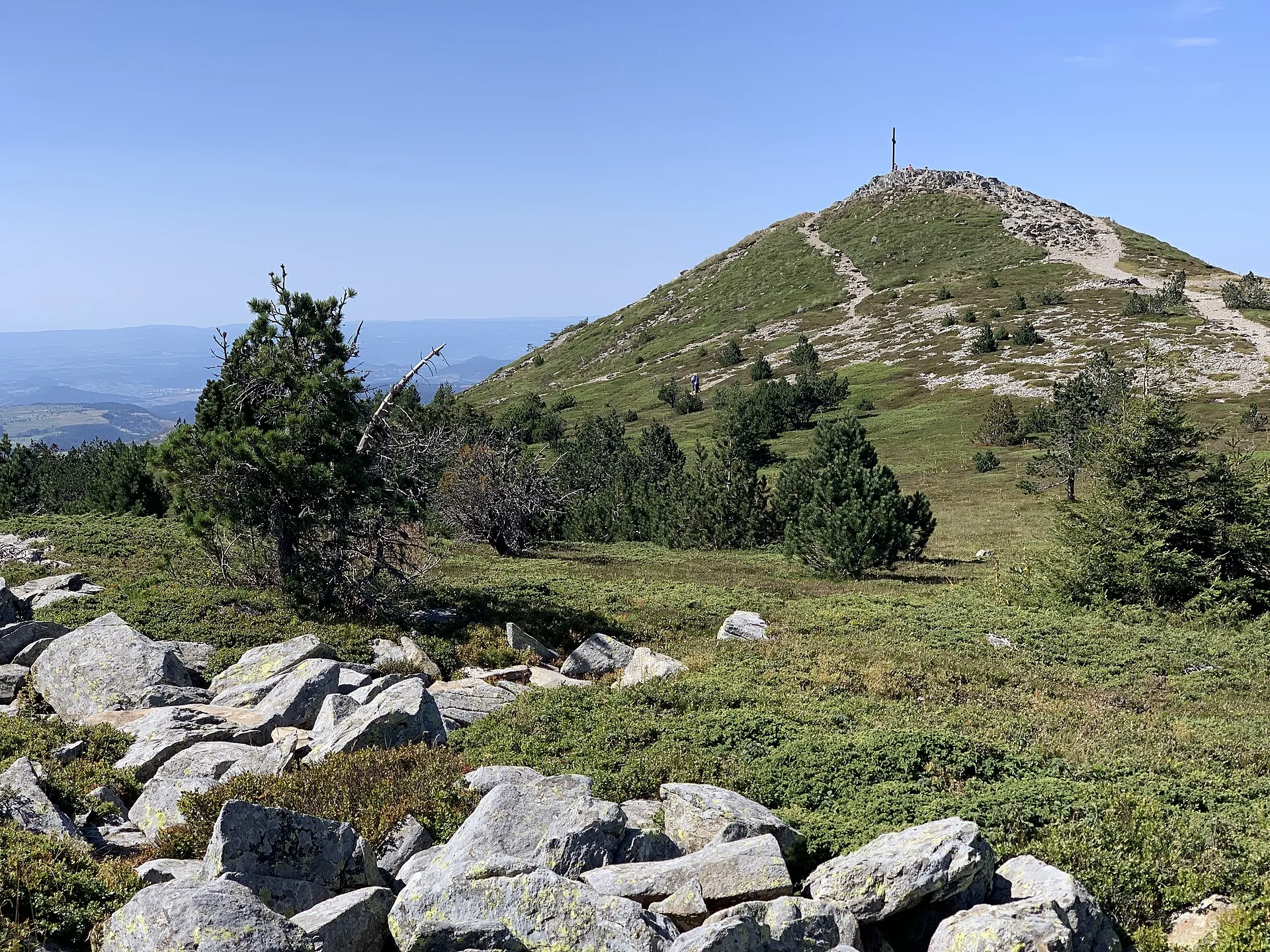
East of Le Puy, on the border with the Ardèche, the Mézenc massif averages around 1,100 m; the Loire rises here, on Mont Gerbier-de-Jonc. Farmers have fattened oxen and heifers here for centuries, to sell them in spring: an inventory from 1680 already records a farmer's method for selling fat oxen at Easter.
The secret is the hay
The rules are strict: heifers at least 24 months old, castrated males at least 30 months, summer grazing, then at least 110 days of fattening in the barn on first-cut, field-dried hay, with no silage. This mountain hay is rich in species, including Alpine baldmoney, known locally as "cistre", which cattle ignore when it is green but devour once dried. It is said to scent the meat itself.
The result is red to purplish beef, finely marbled, with a thin layer of white fat. Tasting panels cited by French Wikipedia found that pot-au-feu shows it off best. The AOC, obtained in 2006, celebrated its 20th anniversary in 2026; European AOP status dates from 2013, according to INAO.
Fin gras is seasonal: look for it from late winter to June (March to June according to Wikipedia, with the season sometimes opening on 1 February). If you walk in spring, ask for it at butchers' shops and on menus in Le Puy.
Verveine du Velay, from apothecary to the Pagès distillery
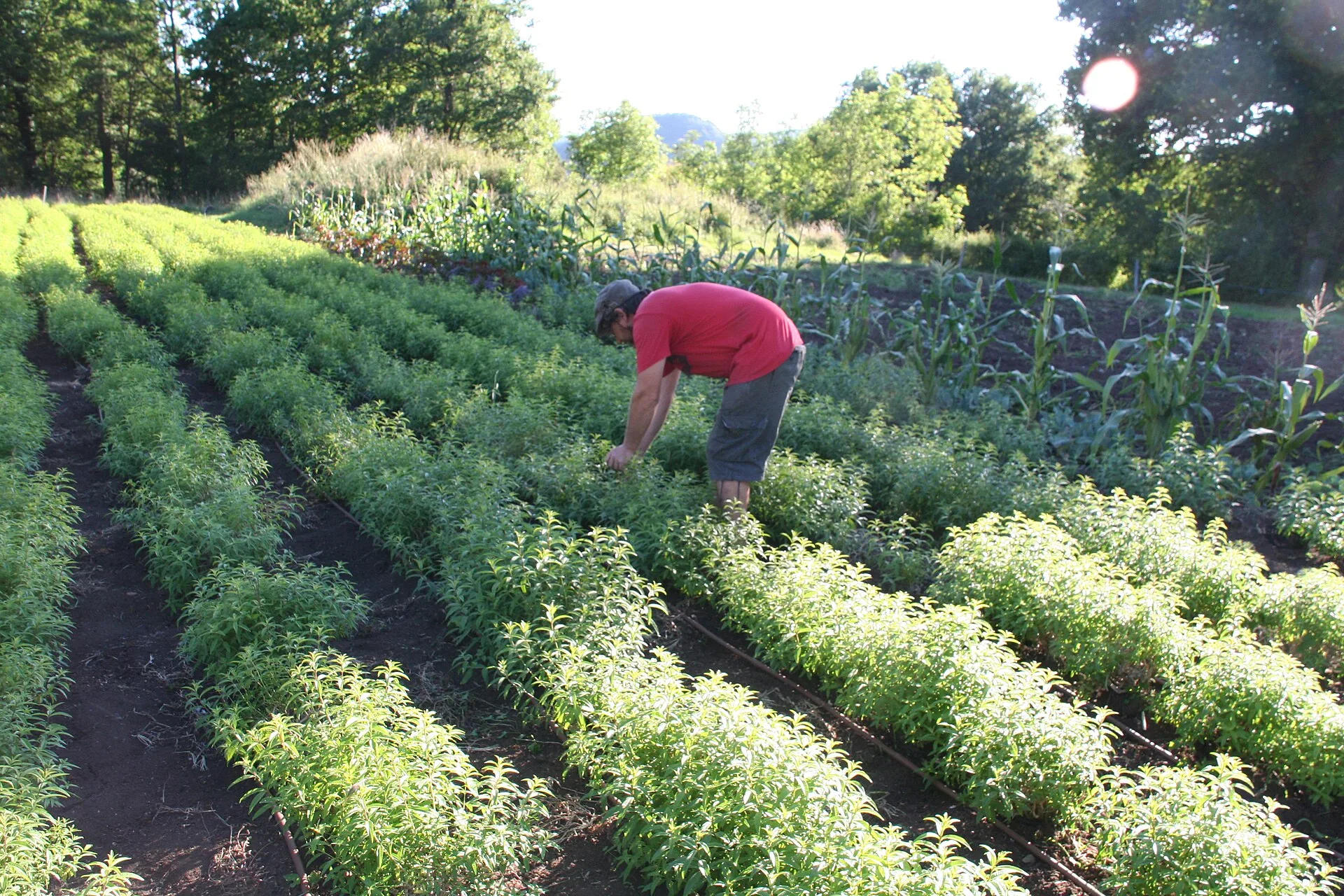
In 1859, Joseph Rumillet-Charretier, a herbalist and apothecary, perfected a lemon-verbena liqueur in Le Puy. In 1886 his cousin Victor Pagès became manager of the distillery, took it over in 1891 and gave it his name. In 1906 the firm built itself a showcase in the Saint-Jean district, on Place Cadelade, crowned with a stained-glass dome and now a listed historic monument.
The distillery now stands in Saint-Germain-Laprade, on the edge of Le Puy. According to My Haute-Loire, verbena grows in its garden, planted in late May and harvested in September or October. Once dried, it steeps for six to nine months in alcohol with more than thirty secret plants and spices, goes through copper stills, then ages for at least a year in oak. About 60,000 litres leave the distillery each year.
- Green, the original, at 55%: the boldest, the classic after-dinner digestif.
- Yellow, softer, and Extra (40%), aged two years.
- Lighter versions too, including an 18% Petite Verveine aperitif.
The Pagès distillery offers guided tours and workshops: a fine half-day if you reach Le Puy the day before setting off. For your pack, choose verbena sweets instead: a few grams, and a taste of the Velay for the climbs.
Cheese: artisou and the farmhouse tommes of the Velay
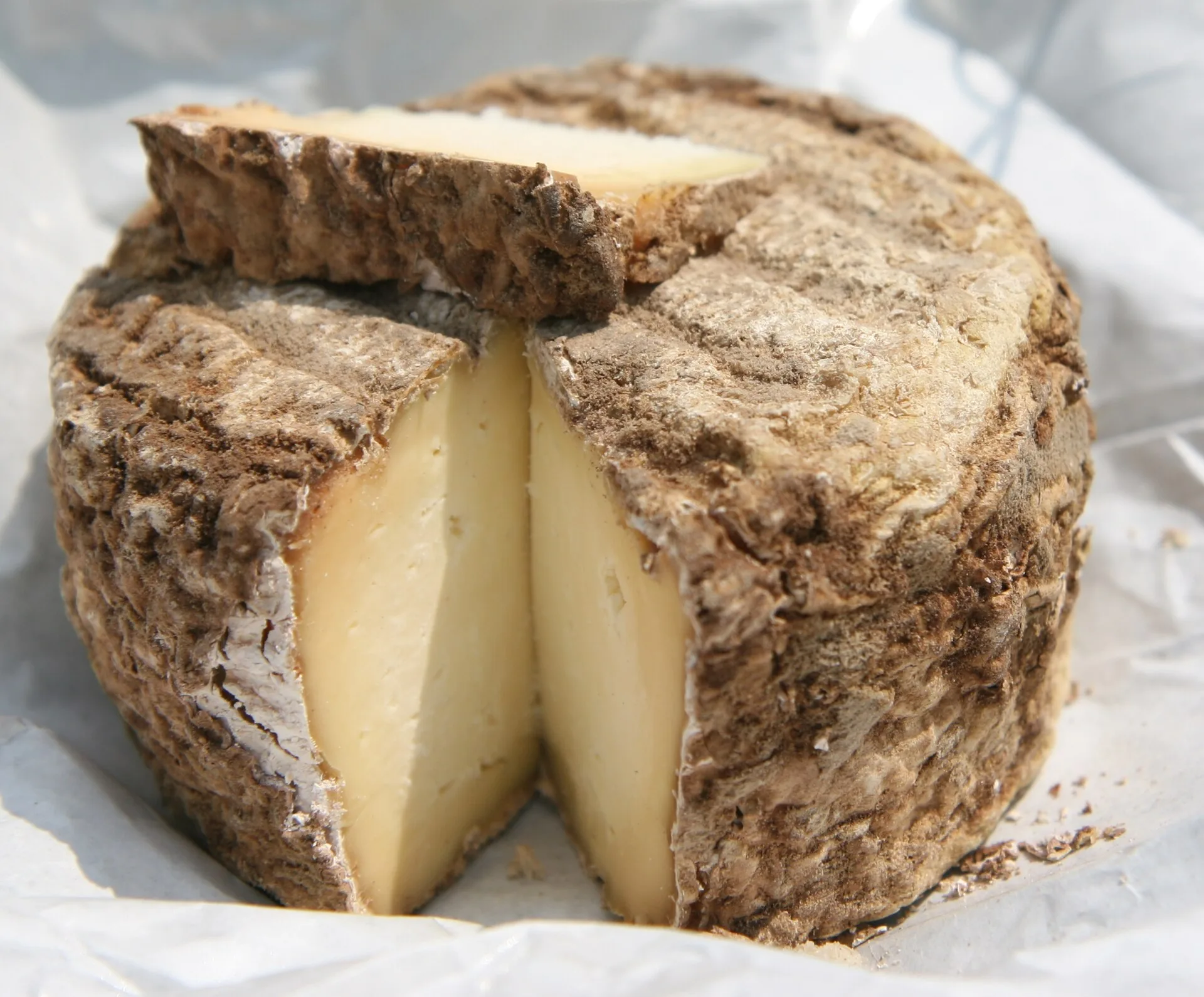
Haute-Loire is often filed under "Auvergne cheeses", but the region's big AOPs (Cantal, Saint-Nectaire, Fourme d'Ambert) are not its own. The local oddity is artisou, or fromage aux artisous: a raw cow's milk farmhouse cheese whose rind is literally sculpted by tiny mites, the artisous. Producers have started the process towards an AOP, which had not been granted when we researched this guide.
You will also come across Le Velay, a traditional cow's milk cheese sold under a collective brand and made on the volcanic plateau. Le Puy's tourist office recommends slipping some into your edible souvenirs, along with local honey.
Charcuterie and cured meats: the walker's snack
Cattle country with hard winters, the Velay has kept a living tradition of artisan cured meats: dry sausages, hams, terrines. There is no big designation to memorise here: charcuterie is judged by its maker, piece by piece.
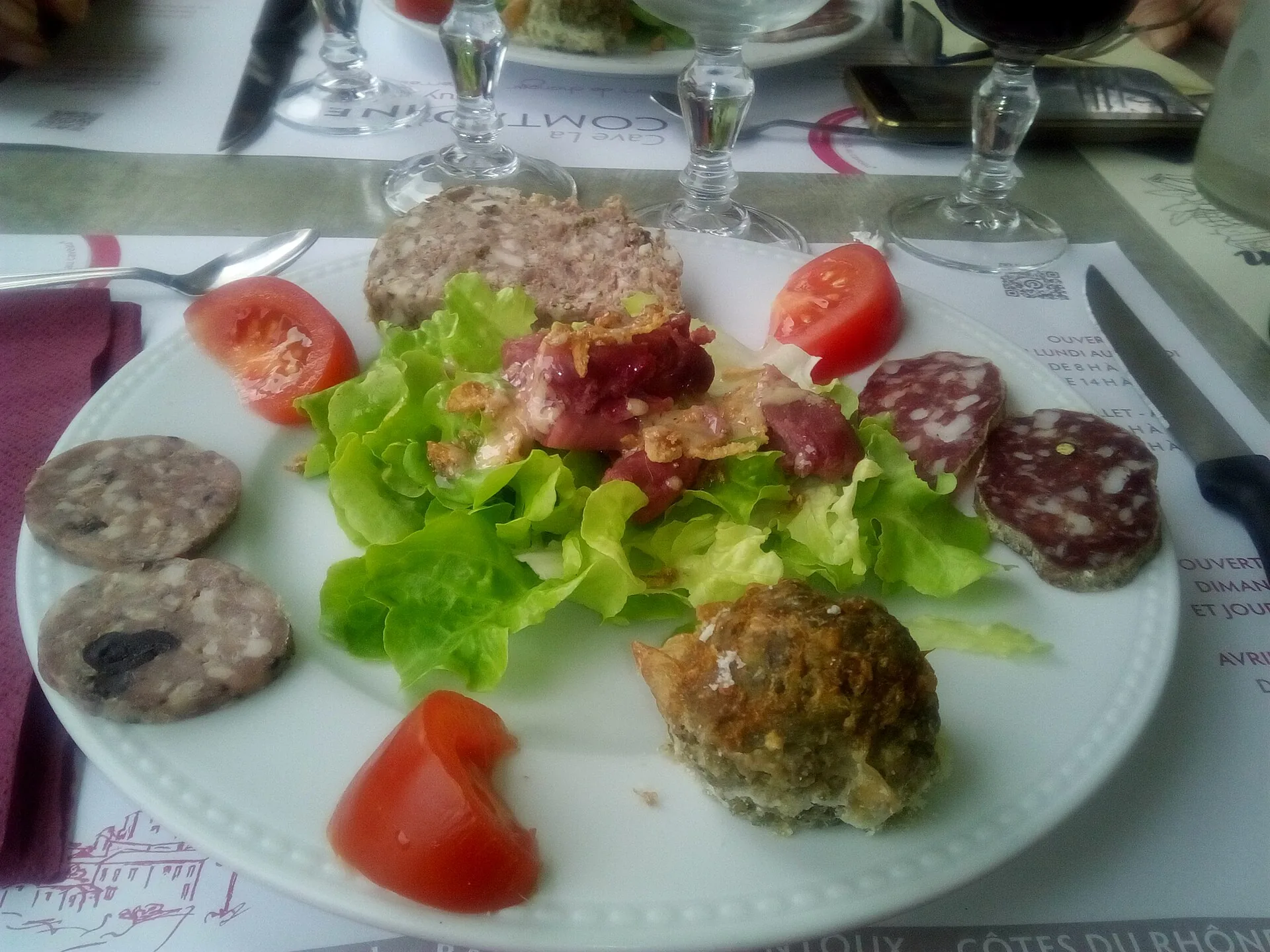
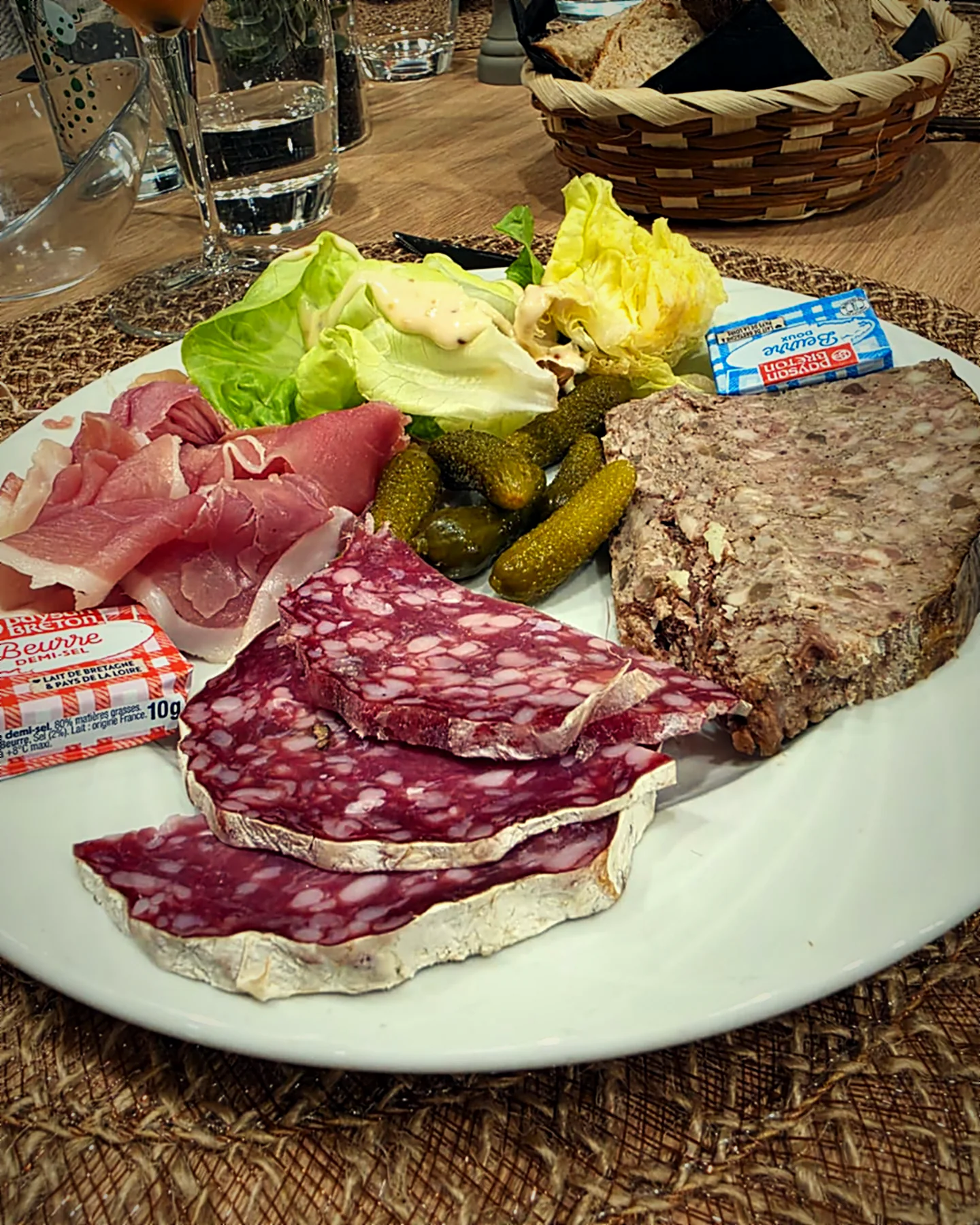
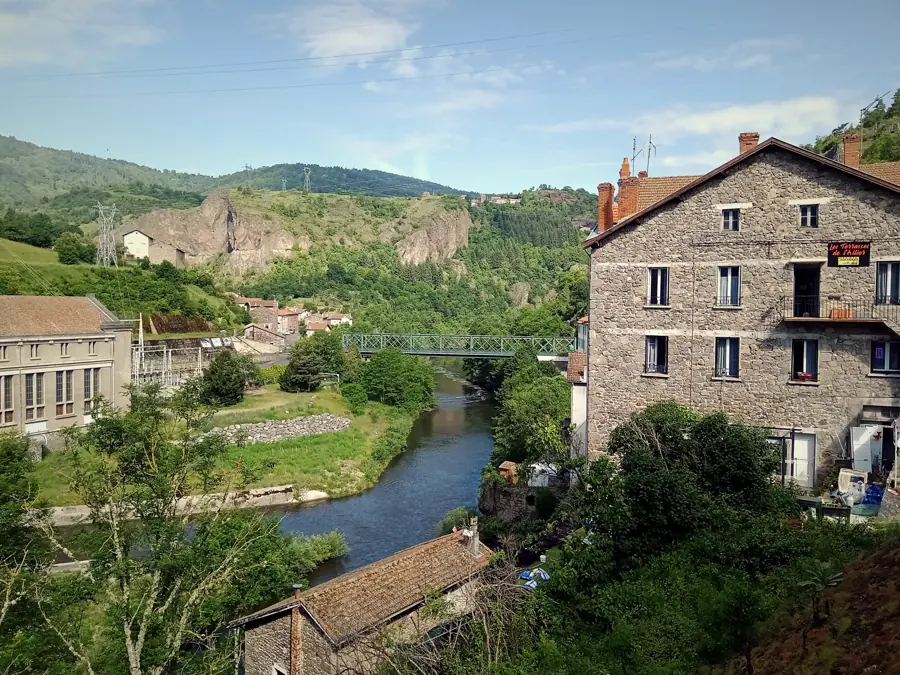
In Monistrol-d'Allier, on the GR65, Aurélien Bergiel, who runs L'Auberge des Amis, told Velay Attractivité that his meat and charcuterie come from Salaisons de Vazeilles-Limandre, a Velay village about 20 km north-west of Le Puy. Behind the bar, he works with La Petite Merveille for liqueurs, "the Verveine, for example".
Where to taste Haute-Loire specialties on the Le Puy route
In Le Puy-en-Velay, before you set off
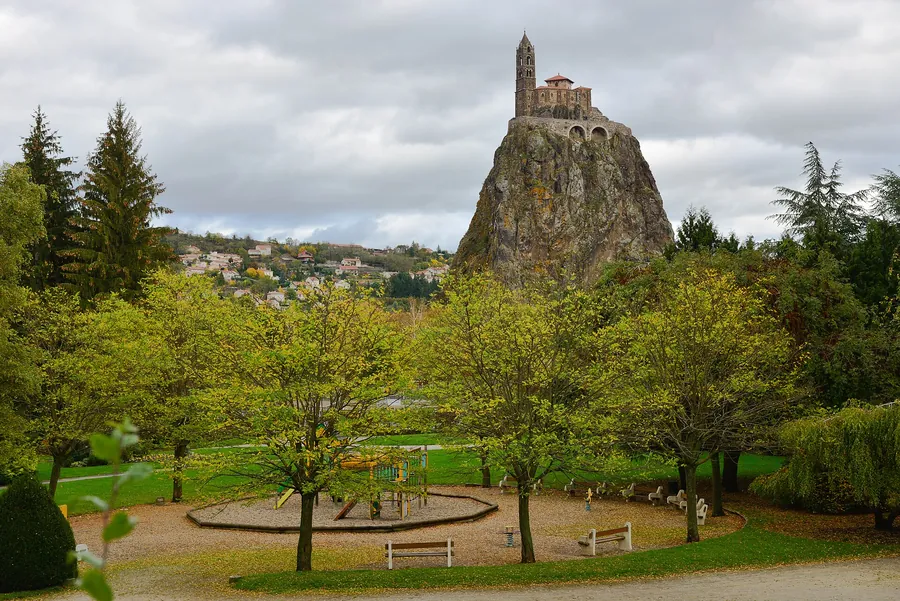
On Saturday mornings, the market on Place du Plot, right where the GR65 begins, is the best place to stock up: lentils, cheese, cured meats. Old-town restaurants serve the lentil in every form, and verbena often closes the meal. Our guide to Le Puy-en-Velay in one day helps you fit these stops between the cathedral and the Aiguilhe rock.
In Monistrol-d'Allier, on your second evening
After the descent from Saint-Privat, Monistrol is the first proper table on the banks of the Allier. At L'Auberge des Amis the cooking is homemade and generous: beef bourguignon, blanquette de veau, a board of Velay charcuterie, and a €22 set menu (starter, main, cheese or dessert, coffee and a quarter-litre of wine). A glass of verbena to finish, and the climb to Saugues feels a little less steep. Other options in the village are listed in our guide on where to eat in Monistrol-d'Allier, and our suppliers in local producers of the Velay.
What to carry home
- Puy green lentils: light and almost imperishable, but best bought at the end of your trip.
- Verbena sweets: the lightest souvenir of the Velay.
- A dry sausage: the classic energy reserve for the Margeride stages.
One last piece of table advice: in Haute-Loire, you eat with the seasons. Fin gras in spring, lentils all year round, verbena any evening. Book your table in Monistrol-d'Allier and taste the Velay at walking pace.
Frequently asked questions
What is the most famous food from Haute-Loire?
The Puy green lentil. According to INAO, the French origin-labelling body, it was the first vegetable to receive a protected designation of origin, in 1996, after a court first recognised the name in 1935. It must be grown and packed in the Velay.
When is Fin gras du Mézenc beef in season?
It is a seasonal meat, sold from late winter through spring. Sources place sales from March to June, with the season sometimes opening as early as 1 February. Outside that window it is hard to find.
Where can I buy Verveine du Velay?
At the Pagès distillery in Saint-Germain-Laprade, just outside Le Puy, which also runs guided tours. Wine shops and delis in Le Puy stock it too, and many restaurants in Haute-Loire serve it as a digestif.
Is artisou cheese an AOP?
Not yet, according to the sources we checked in November 2026: producers have started the process. Artisou remains a farmhouse cow's milk cheese from the Velay, recognisable by its rind, worked by tiny cheese mites.
Where can I taste Velay produce on the GR65?
In Le Puy-en-Velay, at the Saturday morning market on Place du Plot and in the old-town restaurants. In Monistrol-d'Allier, L'Auberge des Amis sources its meat and charcuterie from Salaisons de Vazeilles-Limandre and serves verbena liqueur as a digestif, with a €22 set lunch menu.
Photo credits — Charcuterie artisanale © Marianne Casamance, CC BY-SA 4.0 (Wikimedia Commons) · Verveine du Velay © Jackydarne, CC BY-SA 4.0 (Wikimedia Commons) · Artisou du Velay © Adrien BENOIT à la GUILLAUME, CC BY-SA 4.0 (Wikimedia Commons) · Lentille verte du Puy © Adrien BENOIT à la GUILLAUME, CC BY-SA 4.0 (Wikimedia Commons) · Mont Mézenc © Marie-Lan Taÿ Pamart, CC BY 4.0 (Wikimedia Commons)